


.svg)


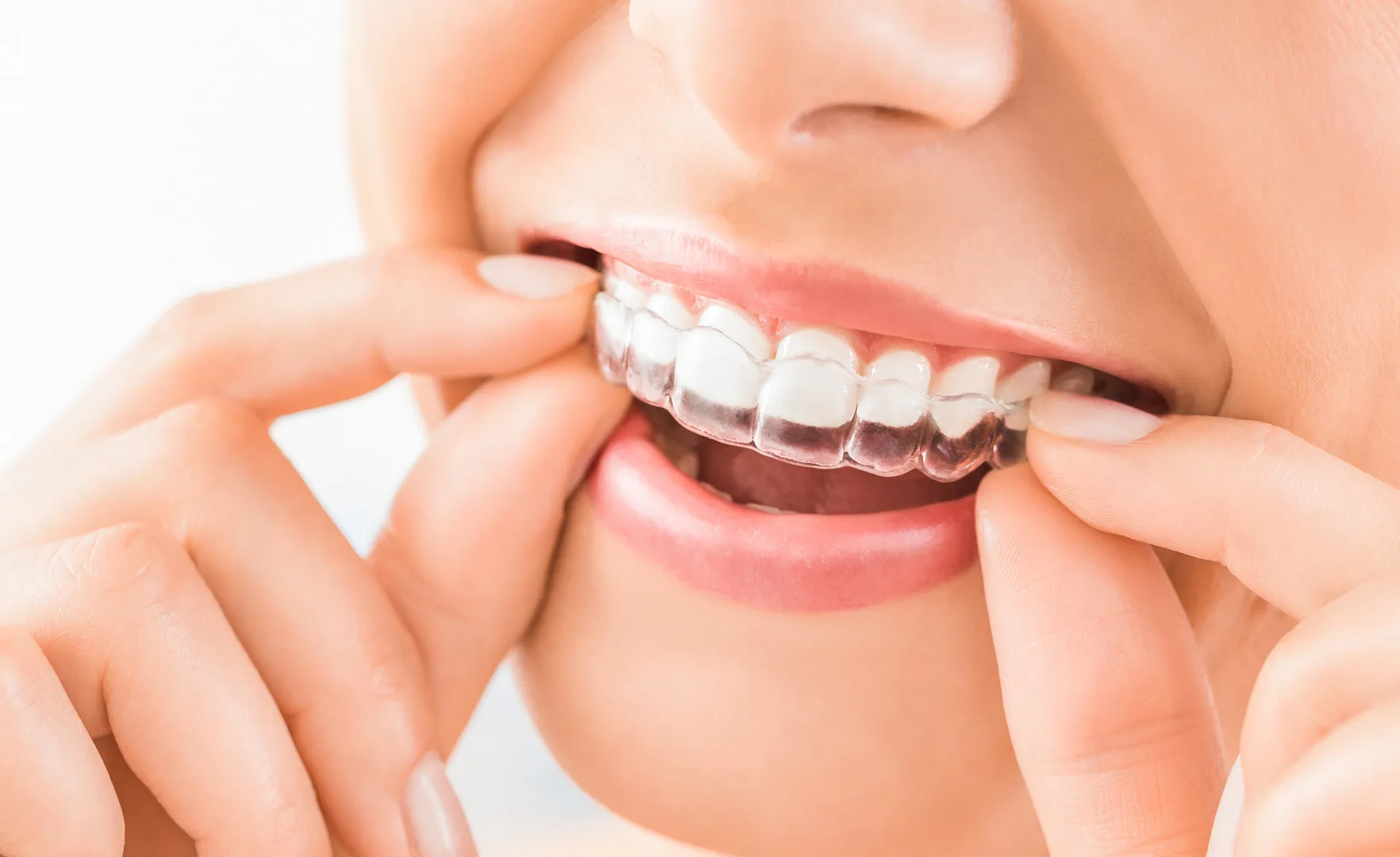
If you've been thinking about straightening your teeth but don't love the idea of metal brackets, Invisalign is worth a serious look. It uses a series of clear, custom-fitted aligners to move your teeth gradually, and most adult patients qualify. The best way to know for sure is a consultation, but here's what goes into that decision and what the timeline actually looks like once you start.
What Makes Someone a Good Invisalign Candidate
Invisalign works well for a wide range of patients, but it isn't automatic. Dr. Nasr looks at a few specific things during a consultation before recommending it over other options.
The type and severity of your misalignment. Invisalign handles mild to moderate crowding, gaps, and bite issues very well. Severe rotations, significant bite collapse, or certain skeletal jaw discrepancies may still need traditional braces or a combination approach. This isn't a strict cutoff, it's a conversation about what will actually get you the result you want.
Your commitment to wearing the aligners. Invisalign only works if you wear each set for 20 to 22 hours a day. Removing them for meals and brushing is part of the appeal, but if you know you're unlikely to keep them in consistently, that's worth discussing honestly before you invest in treatment.
The condition of your teeth and gums. Active cavities, gum disease, or other dental issues typically need to be addressed first. Moving teeth through infected or compromised gum tissue isn't a good idea, so your dentist will want a clean bill of oral health before your aligners are fabricated.
Age isn't usually the deciding factor. Invisalign works for teens with all their adult teeth in, through adults in their sixties and beyond. What matters more is bone and gum health, not the number on your birth certificate.
How the Invisalign Process Actually Works
Once you're ready to move forward, treatment follows a fairly predictable sequence.
Step 1: Digital scan and treatment plan. Instead of messy putty impressions, we use a digital scanner to capture an exact 3D model of your teeth. That scan becomes the basis for a treatment plan showing roughly how your teeth will move, set by set, toward the final result.
Step 2: Reviewing your plan together. Before any aligners are made, Dr. Nasr reviews the digital projection with you. You'll see an approximation of your smile at the end of treatment, and this is the point to ask questions or flag concerns about the plan.
Step 3: Receiving your aligners. Your custom aligner sets arrive in batches. Each one is worn for one to two weeks before moving to the next, gradually shifting your teeth according to the plan.
Step 4: Check-in visits. Roughly every six to eight weeks, you'll come in so we can confirm your teeth are tracking with the plan. If anything needs a small adjustment, this is when we catch it, rather than waiting until the end of treatment.
Step 5: Finishing and retention. Once your teeth reach their final positions, you'll move into a retainer to hold the result. Skipping this step is the most common reason people see their teeth shift back over time, so it's not optional, just less visible than the aligners themselves.
How Long Does Invisalign Actually Take?
This is the question almost every patient asks, and the honest answer is: it depends on your starting point.
Mild cases (small gaps or minor crowding): often 6 to 9 months. Moderate cases: typically 12 to 18 months. More complex cases involving bite correction: can run 18 months to 2 years.
These ranges are typical, not promises, since every mouth responds a little differently. What we can tell you at your consultation is where your specific case is likely to fall, based on the digital scan and the extent of movement needed.
What Invisalign Does Not Fix
It's worth being upfront about this. Invisalign addresses tooth position and many bite issues, but it doesn't change the size or shape of your teeth, address significant gum recession, or whiten your smile. Patients who want a more comprehensive result sometimes pair Invisalign with teeth whitening or bonding afterward, but that's a separate conversation and a separate decision.
What Affects the Cost of Invisalign
We won't quote a number here since every treatment plan is different, but a few factors tend to influence what a given case costs: how many aligner sets your plan requires (mild cases need fewer sets than cases involving significant crowding or bite correction); whether attachments are needed (small, tooth-colored bumps bonded on temporarily to help the aligners grip and move teeth more precisely); your insurance coverage (many dental plans include an orthodontic benefit that applies to Invisalign the same way it would to braces); and whether you need prep work first (a cavity or gum issue addressed before aligners are made is a separate, upfront step). The clearest way to understand your own cost is a consultation, where we can show you your specific plan and walk through what your insurance is likely to cover before you decide anything.
Frequently Asked Questions
Does Invisalign hurt?
Most patients feel pressure or mild soreness for a day or two after switching to a new aligner set, similar to the feeling after tightening braces. It typically fades quickly and isn't considered painful by most patients.
Can I eat normally with Invisalign?
Yes. Because the aligners are removable, you take them out to eat, which means no food restrictions the way there are with traditional braces. You'll want to brush before putting them back in to avoid trapping food against your teeth.
Will people be able to tell I'm wearing them?
Invisalign aligners are made of clear plastic and are designed to be far less noticeable than metal brackets. Most people won't notice unless they're looking closely.
What happens if I lose an aligner?
Call our office right away. Depending on where you are in your treatment, we may have you move to the next set early or have a replacement made, so you don't lose progress.
Is Invisalign more expensive than braces?
Cost varies based on the complexity of your case. We'll go over your specific treatment plan and costs at your consultation, including how your insurance benefits may apply.

Thinking About Invisalign? Let's Talk
The only way to know for certain if Invisalign is right for you is a consultation and a digital scan. Dr. Nasr will walk you through your specific case, give you a realistic sense of the timeline, and answer any questions before you make a decision. If you've been putting off straightening your smile because of what you pictured braces being like, this might be the moment to ask about an option that fits a little more easily into your day-to-day life.
Explore Invisalign Clear Aligners to learn more about treatment at our West Long Branch office, or request an appointment to get started. If you're also curious about finishing touches like teeth whitening once your Invisalign treatment wraps up, our team can walk you through that too. You can also meet Dr. Damurjian and Dr. Nasr before your first visit.



Monday - Tuesday: 8:00 AM – 5:00 PM
Wednesday: Closed
Thursday: 8:00 AM – 5:00 PM
Friday: 8:00 AM – 2:00 PM
Saturday–Sunday: Closed