


.svg)


A missing tooth isn’t just a cosmetic concern — it can affect the way you speak, chew, and how your bite functions overall. At Damurjian & Nasr Dentistry, we provide high-quality custom dental bridges that restore both the appearance and function of your smile. Whether you’ve lost a single tooth or several teeth in a row, a dental bridge is a time-tested solution designed to close the gap and support your long-term oral health.
We proudly serve patients throughout West Long Branch, Hoboken, Jersey City, Princeton, and Summit/Short Hills, NJ with personalized, high-end restorative dental care rooted in trust and precision. You’ll work directly with either Dr. Robert J. Damurjian or Dr. Mark A. Nasr, both of whom bring decades of combined experience and a passion for restoring smiles with lasting results.
What Is a Dental Bridge?
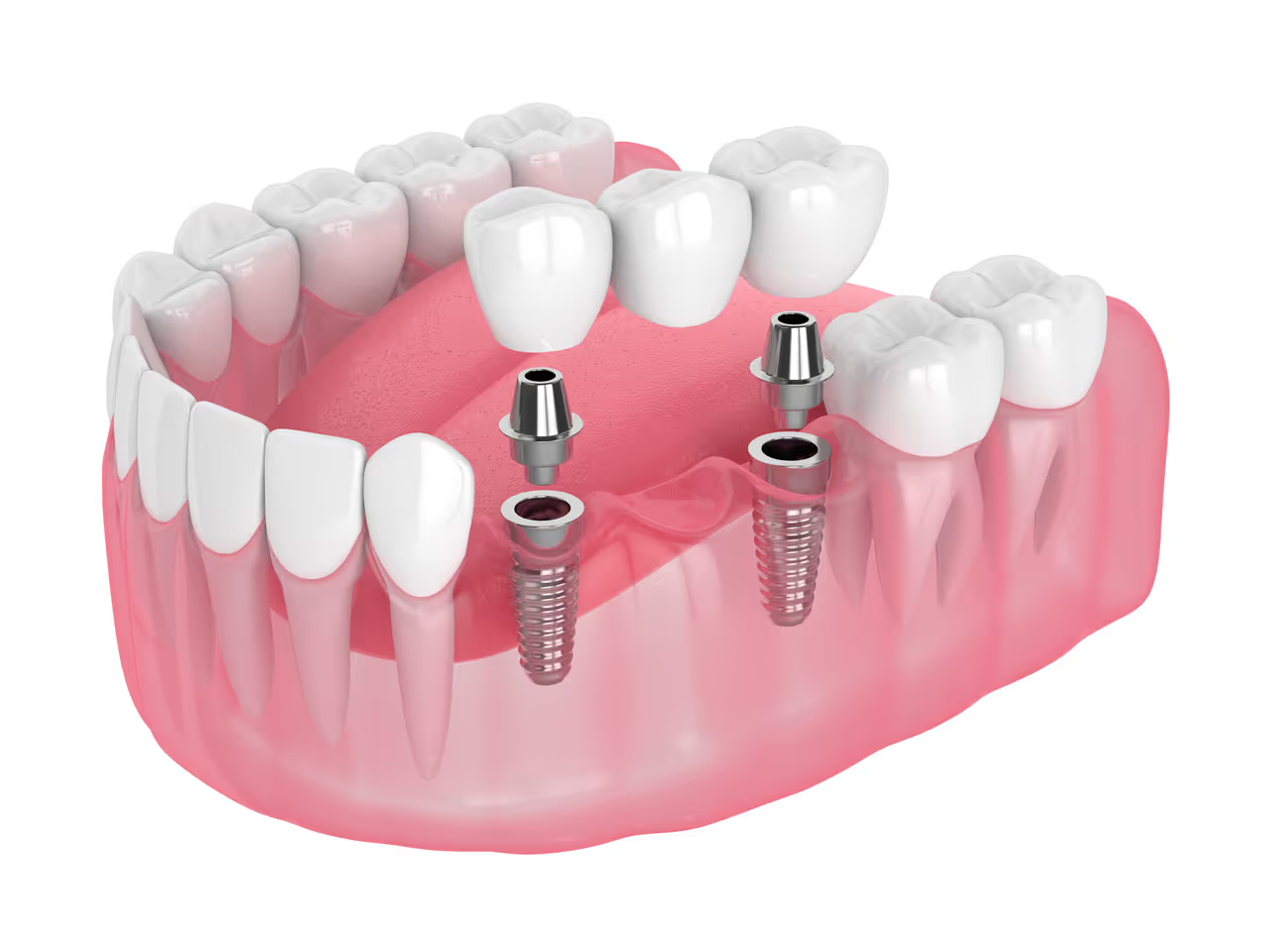
A dental bridge is a fixed (non-removable) prosthetic used to replace one or more consecutive missing teeth. It is made up of two or more dental crowns placed on the healthy teeth adjacent to the gap (called abutment teeth), with one or more artificial teeth (pontics) in between.
Bridges are crafted from durable, lifelike materials such as porcelain fused to metal, zirconia, or all-ceramic for a seamless, natural appearance.
Common reasons patients choose a dental bridge:
- Replace one or more missing teeth
- Prevent teeth from shifting into the empty space
- Maintain proper bite alignment
- Improve speech and chewing
- Restore facial shape and smile aesthetics
Types of Dental Bridges We Offer
We provide a variety of bridge types depending on your specific case and oral health status:
- Traditional Fixed Bridges – Anchored to healthy natural teeth on either side of the gap using dental crowns.
- Cantilever Bridges – Used when only one adjacent tooth is available for support.
- Maryland (Resin-Bonded) Bridges – Often used for front teeth; bonded to the back of adjacent teeth with minimal alteration.
- Implant-Supported Bridges – Ideal for replacing multiple teeth when dental implants are used as secure anchors rather than natural teeth. Learn more about dental implants here.
The Dental Bridge Process
Your treatment will be tailored to your needs, but generally includes the following steps:
- Comprehensive Evaluation – We'll assess your oral health, take digital X-rays, and determine the best bridge type for your situation.
- Tooth Preparation – The adjacent teeth are shaped to support crowns (if not using implants).
- Impressions & Temporary Bridge – We take precise impressions and place a temporary bridge to protect your teeth.
- Custom Fabrication – Your final bridge is handcrafted in a dental lab for optimal fit and appearance.
- Final Placement – Your permanent bridge is placed and adjusted for comfort, fit, and bite alignment.
We also offer oral conscious sedation and nitrous oxide for patients who may feel anxious during longer procedures.
Benefits of Choosing a Bridge
Replacing missing teeth with a bridge offers more than just a cosmetic fix. Some of the most valuable benefits include:
- Improved chewing and digestion
- Clearer speech
- Restored symmetry and facial structure
- Prevention of shifting teeth
- Boosted confidence and smile aesthetics
Properly maintained bridges can last 10–15 years or longer, especially when combined with regular cleanings and exams.
FAQs About Dental Bridges
Question text goes here
Answer text goes here
How long do dental bridges last?
Dental bridges typically last between 10 and 15 years, depending on oral hygiene habits, diet, and regular dental care. With good maintenance, many patients experience even longer-lasting results.
Are bridges better than dental implants?
Both bridges and implants are excellent tooth replacement options. Implants are ideal when bone and tissue health allow for surgical placement. Bridges may be more appropriate if nearby teeth already need crowns or if you prefer a non-surgical option.
Will it be hard to eat or talk with a bridge?
After a brief adjustment period, most patients resume eating and speaking normally. In fact, replacing missing teeth often improves clarity of speech and chewing efficiency.
How do I clean around a dental bridge?
Daily brushing and flossing are essential. We'll show you how to use floss threaders or special bridge floss to clean beneath the pontic and around the supporting crowns.
Can children or teens get a dental bridge?
Bridges are usually reserved for fully developed adult teeth. For pediatric patients, space maintainers or other solutions may be more appropriate, depending on age and dental development.

Schedule Your Dental Bridge Consultation Today
Missing teeth shouldn’t stop you from living confidently. At Damurjian & Nasr Dentistry, we’re committed to helping you reclaim your smile with beautifully crafted dental bridges that look natural, function comfortably, and last for years.
Call (732) 222-4357 or request your appointment online today. We welcome patients from West Long Branch, Jersey City, Short Hills, Princeton, Hoboken, and surrounding communities throughout Monmouth County.
.avif)



Monday - Tuesday: 8:00 AM – 5:00 PM
Wednesday: Closed
Thursday: 8:00 AM – 5:00 PM
Friday: 8:00 AM – 2:00 PM
Saturday–Sunday: Closed